

The 3 fundamental areas of building wealth
He was a property investor, and that conversation changed the way I viewed the stock market. Later I discovered it also suited my risk profile. Hanging on long term to a stock that went up and down like a yo-yo was hard work emotionally. I wasn’t getting the capital growth I was after. I also discovered around that time you could protect or ‘insure’ your shares through options. Thirdly, you could ‘rent’ your shares out using options to create cash flow. And that’s when I realised there were smarter ways to play the stock market game.
When I looked further, getting in, taking a profit, and getting out with that profit attracted me, too. Even better, I discovered I would have a very defined result in a very defined time frame. For me that worked. There was more certainty in that I would know whether I was trading profitably. Later I discovered how to protect my positions.
Those were my ‘Eureka’ moments.
So how does trading fit in the grand scheme of building wealth? And for that matter what is wealth?
Wealth is more than just finances. Wealth is also about an abundance of life not just in the material, but in the relational, spiritual, physical health, and time. I am a big believer in aspiring to be all that I was meant to within the short time I have on this planet. Too often I have met people who don’t know the answer to two deep but critical questions …
- 1. What is your life purpose?
- 2. Why were you put on the planet for such a time as this?
 They are living day to day, directionless, and suddenly wake up in their mid-40s or later, realising they aren’t getting out of life what they wanted.
You see time is one of the great commodities too many squander. And it is why time management is absolute key in work, business, family life, and in taking advantage of opportunity. It is also another reason why I love options trading. It is requires less attention than a business does. And it allows you “time-out” from the market to assess a trade when necessary. Futures and FOREX trading don’t generally offer that luxury. Very often a split decision in the heat of the market must be made.
From years of consulting I’ve noticed a few things. The great majority of people who do invest successfully have gone for property and on the whole in Australia done well in the past. A few others have done even better financially in business.
What you have to realise is it is harder for an employee to build wealth, in the sense that an employee has a fixed income. Provided a business owner is successful, and has the right systems in place they have unlimited potential to build wealth.
Very often they will then park money into other investments such as land to create greater wealth.
So why trade?
Well fundamentally it is important to understand the difference between active and passive income.
Active income is money earned by you actively working. Passive income is money earned through investments which require far less attention and personal exertion. Time is basically freed up through passive income, allowing choice in life when it comes to what you would prefer to do, as opposed to what you have to do to survive economically.
In each of the categories of business, trading, and property, there may be aspects of active vs passive depending on the particular strategy. What may also occur is in this age of computer automation, some business activities particularly online, can be turned from active to passive income provided the right systems are operational.
What is important for investors is to define what works for them with consideration to their goals, time, lifestyle, and skill set, to build wealth.
Trading is active in the sense that you have to monitor regularly. It is passive in the sense that there is a huge amount of flexibility time wise in monitoring it.
There may be different reasons people trade.
One great frustration of property investors I’ve noticed is when the banks refuse to lend them more money. The investor can’t get the leverage they want to keep building and accumulating. Trading being a cash flow strategy potentially provides that. You can leverage a small amount of capital, and provided you have a great strategy, consistently build more capital investment for further investments.
 Conversely, one of my own mentors purely does trading. The capital he has invested provides substantial consistent cash flow which for him outgrows a property portfolio. In fact, he sold an investment property in a prime location to bolster his trading account.
So you can see how trading as a cash flow strategy can be used in both instances, one to create more investments, another to solely focus on great returns.
The key to remember is wealth building falls in 3 specific areas, property, trading and business. All of them can have aspects of capital growth and cash flow; however options trading is primarily a cash flow strategy.
Investing is a business
Ask any switched on accountant, and the more you can run your investments like a businesses the greater the likelihood is it will produce greater wealth.
I am big on asset protection and tax minimisation. Structuring was my entry into the financial industry, and I love to work in the strategy of not owning anything but controlling everything!
 Trusts and companies are key components used. This is another area of finance in itself, but it is this background that affects my mindset when it comes to trading. Run your trading like a business. For those who are serious they would want to consider running through entities structured effectively for asset protection, tax minimisation, with automated reporting systems making it very easy to track what is going on. Thankfully most good online brokers have great reporting systems when it comes to tracking options trading.
The mindset to run trading like a business is absolute key!
I remember when I was first getting into trading and mentioned it to an old friend. He said, “So you like taking a punt Derek?”
To his surprise I said, “It’s not about taking a punt. It’s running it like a business!”
My initial goals were to purposely make trading “boring”. I wanted to take the gambling out of the psyche – the ‘manic crazed gambler’ placing a trade on a whim! I worked too hard for my money and I wasn’t prepared to see it just disappear!
The key is to recognise what a business does. It has a system of behaviour by which it derives an income or profit. There are things in place whether it is a marketing department through to a factory assembly line that produces an outcome.
For me trading is very similar.
There is a system that identifies an opportunity/ a trade.
There is a system that assesses whether this is the right trade for the account I control.
There is a system in place that handles the risk management.
There is a system in how I place the trade, monitor it, and exit it.
There is a system I’ve developed to unemotionally assess what to do if a trade goes against me.
It is a process. And it’s the process that protects me and gives me consistent results.
Having the discipline to follow a process is the key when it comes to the markets.
Saving vs Giving and the Financial System
For many starting out saving is the first step to building wealth. Many wealth creators insist you must save at least 10% of the income you produce to build wealth. This discipline in rewarding yourself before paying your creditor ensures you are paid for your labour. Once this habit is ingrained then investing comes into the picture. The trouble I find is most people say they can’t afford to put aside 10%. It’s been argued by doing so you are making your creditors more important than yourself. You work hard for your money. Why should you be paid last after everyone else when they haven’t had to put in their sweat equity like you? Wealthy people usually have a very healthy level of self-worth.
I found it fascinating when someone once asked me, ‘where does giving fit in with the whole wealth equation?” I recognise that saving at least 10% is key in building wealth, however how does it work in terms of contribution to humanity? I know you can give of your time, but how should we view this in terms of money?’
Speak to many wealthy individuals and they may admit they give at least 10% of their wealth away. In fact for them it is the key for creating more. There’s an unmeasurable spiritual element at play here that is difficult to explain or give reason to some academics.
I pointed this person to an ancient financial system created under Mosaic Law. By comparison our current financial system has made it much more difficult to build wealth!
Mosaic Law began when the Jewish nation were being freed from slavery and incredible oppression in Egypt. You have to understand that the intent of the law being created at the time was to protect them, and actually give them freedoms rather than restrictions.
For example, under the Ten Commandments they were not to work on the 7th day but rest! As they were ex-slaves their mindset had to have a huge shift. They would have been blown away to learn they’d actually get a day off! This was unheard of as slaves building the pyramids of Egypt.
There were also laws on not murdering each other, which was again revolutionary for their time! As slaves, human life under the Egyptian rule was dehumanised with their labour seen as a merely a commodity. Their response would have been somewhat like, ‘You mean we have protection? We are recognised?’
According to the recordings in the Torah, on which many principles our Western law is based, the Jews were not only moving from slavery to freedom, but also into wealth! They were travelling to what was referred to as their ‘Promised Land’ located in Canaan which is now the current occupied state since World War II. Further, the Torah contains key principles in terms of finances. Under this system:
- 1. There were no taxes
Imagine a state without tax! Would more people be happy to give voluntary to the poor rather than letting the state take over that role! It’s important to note the Jews were taxed when they started to get kings to rule over them, but before this period there’s never a taxation system in their Mosaic law.
- 2. Their governance structure involved giving
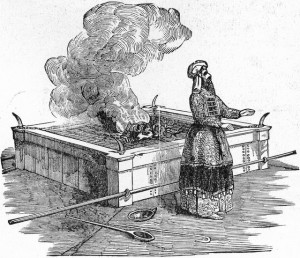 Even pre-dating Mosaic Law there are elements of giving called tithing. However, at the time Mosaic Law was forming there were twelve tribes of Israel. Eleven of the tribes were allowed to have land and farm it, while the remaining tribe known as the Levites, weren’t. The Levites’ task was to solely focus on service in the temple. The temple and God’s residing presence were the primary focus of Jewish culture on which life revolved. The Levites were to contribute to the spiritual care of the nation supported by the gifts from the other 11 tribes. These gifts were the produce and wealth of the land rewarding the priests for their service to the nation as a whole. Today you can understand why there are various tax breaks for charitable causes to recognise their contribution to the betterment of humanity.
Under this system a tithe of 10% of the produce of the land would be given to the Levites. In many ways that giving was a part of their spiritual worship and contribution which gave them meaning.
There were various other tithes in their traditions, such as first fruit offerings, where they would give of the first fruits of the harvest.
- 3. Lending conditions involved no interest
Under Mosaic Law they were to lend without charging interest to a fellow Jew! After 50 years there would be a settlement of all debts which they called the year of Jubilee. That is in the year of Jubilee all outstanding debts were cancelled.
Can you imagine more responsible lending practises under these conditions intended to help fellow man rather than profit from them? You could assume as the lender you would not give a loan out that was impossible for someone to pay if you knew that the Jubilee year where all debt cancellation was due, would in a few years’ time be just around the corner!
The result of all of these laws was there was more purity in the intent of assisting fellow man.
When you look at the history of banking you see how far its system has strayed from the original principles of helping out your fellow man.
The Napoleonic wars saw international bankers lend funds to both warring nations insisting as part of the condition of the loan that both warring parties would cover all debts of the conquered. Blood was shed while the bankers profited.
The money lenders of Venice invented what we know as fractional reserve banking. Gold was the main commodity of its time, and naturally was heavy and difficult to transport. Additionally, there was the risk of theft, so the merchants invented monetary notes representing the value of gold deposited to them. What the merchants soon realised is they could lend out more monetary currency than they had gold backing in their storehouses, as the probability that everyone would want their gold back at the same time was very low. This became known as fractional reserve banking. In other words they would lend out more than they had in store. It was creating money out of thin air, and the banking system still operates in this way.
Why is all of this important to consider?
Because if you understand how the monetary system is actually constructed you see how artificial currency and means of exchange really are. Additionally, options contracts are so easily created in the market, and traded with a few clicks of a computer mouse. The key is to become emotionally unattached to trading.
Additionally, owning your money rather than it owning you is very important in the management of wealth. The more you can see how it flows, that there are winning trades, and sometimes losers the less emotional you are about it.
In business I’ve also seen people give with ‘strings attached’. I have seen both extremes where the love of money leads people to do crazy acts and they are consumed by it. Even to the point where what they are doing is fraudulent and evil. What happens is their money owns them rather than them owning their money!
Then there’s the other extreme where people will sacrifice so much to their own determinate.
As a general guide what I attempt to live by is if you come across a genuine need, (and I do mean genuine as there are hustlers out there), and it is in your power today to assist them, than do so.
I am convinced money is a tool to do good with. For me I think a balance is necessary. Money has a ‘flow’ so to speak. If it comes and goes in a spirit of generosity and abundance, that’s a healthy place to be.