

Imagine what it would be like if you could go into trading without any expectations?
OVERVIEW
Options trading is about positioning yourself so you can profit from what the market is doing. The market moves on mass and is driven by buyers and sellers. Buyers and sellers are often driven by two emotional reactions – fear and greed.
Even when computers are trading via pre-programmed algorithms, they can struggle to calculate the emotional human factor.
Emotions can be completely illogical in trading. There is often an overreaction to news in the market. Nevertheless that over-reaction is what an options trader has to consider when placing their trades.
HUMAN BEHAVIOUR
I once had a bank teller ask if they could assist anyone as I waited in a very long line at the bank. I leapt at the opportunity to deposit my cheque in a quicker manner so she took me into a side office and I presented the cheque that needed to be put in my Self Managed Super Fund. When she found out I was managing my own retirement she said, “You’re brave!”
 People will always project their opinions on you even when they are uncalled for. And if you are going down the path of options trading don’t be shocked that the majority of your friends or people even in the investment industry just won’t get it.
In fact the moment you tell them you are into trading the stock market the likely response you are going to get is “That sounds dangerous.”
Here’s the twist …
In my mind it is more dangerous to be invested in a fund where I don’t know who the manager is, what precisely the fund is invested in, what time frames those investments are likely to mature in, and running the risk of leaving my finances in the hands of a party who is not personally interested in my retirement prospects. Seeing the fund manager get rewarded whether the fund makes or loses money as an investor is a little hard to swallow, especially if they are losing your wealth.
At least if I do it myself I know exactly what I’m invested in. I can assess the risk, I have some control over the project, and I can define whether it suits me or not. It is about taking responsibility while working with my handpicked team of advisors.
For me leaving that to someone else is a denial of my financial responsibility, and is more dangerous as I don’t know what a fund manager is or isn’t capable of.
In fact the more knowledge I have on the investment the safer it makes it for me. So this in itself redefines safety in many ways.
Humans long for safety but will often default to what it is familiar to them. Sometimes to an outsider looking at someone else’s situation it appears dangerous. And it may be in reality! For the individual in the situation they can’t see it because the danger is so normal for them. And they are comfortable in this state of “dangerous normality” because it is familiar territory. Leaving the real danger would take them out of their comfort zone into what they would perceive as “dangerous” territory, when in fact it is the opposite. It would be safe, but unfamiliar.
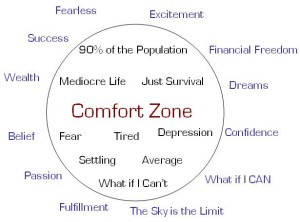 Additionally most people don’t want to leave that comfort zone. And when they do start to step out, the group of associates and friends they’ve hung out with are often calling them back to the place of their mediocrity. What would it say to those who remain, should one of their own break away and improve themselves? This is why it’s so hard for some people to step away from being employees to being business owners, leave the job they have been in for so many years, or even in extreme cases leave the drug scene. Change for many is hard.
One of my business partners often tells the story of a guy who is at the top of the earnings within his group of friends taking $80,000 a year. Let’s say he gets the opportunity to earn $120,000, but it means now instead of being at the top, he will be at the bottom in that new circle of associates. Often you will see them sabotage the opportunity, and actually stay in the position they are in even though financially they would be better off. Stepping into the unknown and also now taking a position of humility rather than holding the ‘top dog’ title can be too daunting.
Stepping into the trading game is a unique area. So is investing for that matter. 93.48% of the population are not property investors. (This doesn’t include your personal residence which is generally a liability.) Even fewer are likely to be actively trading options on the stock market.
To those transitioning into a new area of financial responsibility for them it’s time to redefine uncertainty. Because you’ve never faced it before there are guaranteed feelings of uncertainty that will come up! So to handle it you have to reassure yourself, “Uncertainty is the new normal!”
Generally marketers also know that humans behave in a herd mentality. Every retailer likes a full shop. If lots of people are in the store and the others see it, more are likely to gather in the store and increase the likelihood of sales. Similarly with online sales you will see many shopping sites show how many have bought this product and a timer showing when the sale is over creating urgency and emotion to buy. We humans hate the thought of missing out.
Watching the herd is important for the options trader. Responding to it and placing yourself where you can profit from it is an art.
Warren Buffet has been quoted as saying, “It’s better to hang out with people that are better than you. You’ll drift in that direction.”
This is why traders are a tight knit community. Very few do trade options. Very few get it. Even less do so successfully, and trading can be a lonely role; so it’s nice to bounce off others who understand you.
Most people won’t get it when you trade; including family, friends, work colleagues, and I even found on occasion neither does the broker. S/he may question the strategy you’ve employed especially if your exit strategy which defends your account is not obvious.
If you have a tested strategy which you understand, have tried even in extreme market conditions and had success, then there’s a safety there because you’ve done your research. You must be very aware you could face criticisms and comments not welcomed from others which if not processed correctly could destroy your trading confidence.
A trader must defend their confidence to trade. Lose your confidence and you will run the risk of being immobilised by fear.
EMOTIONS OF THE MARKET
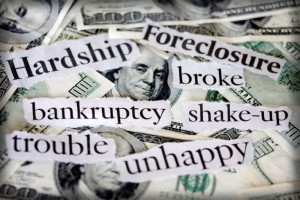 I’ve mentioned the two emotions of the markets – fear and greed.
In fact some well-known media publishers use a ‘fear and greed’ indicator using options as one of the measurements of market sentiment. They look at how many call buying orders are in the market as opposed to put buying orders, and use this to try and measure how the market is thinking about a stock.
Both of those emotions are what generally drive the market movements. Very often in the case of fear there is an overreaction. As a general comment when there is a big swing the stock tends to fall quicker than when it’s rising.
Despite the overreaction an options trader must know how to respond to the hysteria of the market, hope to profit from it, or as needed defend their account with a strategy.
You must be aware the media also likes to sell drama and will put out headlines that sell. This can be a distraction to the trader. It’s a funny tension between being aware of what’s been happening in the overall market, but not getting caught up in the Wall Street noise.
As an owl that likes to swoop to take its prey, so a trader sits in the tree watching the madness of the markets, and when they see opportunity to take a trade they swoop to grab a profit.
Most know the Warren Buffett quote of trading, “Rule No.1 – Never lose money. Rule number 2 – never forget rule number 1.”
It’s a great quote and a key when it comes to defending your account.
But consider this – what if you never got caught up in any of the emotion?
It is good for students of options to ask themselves the following…
What notions of trading or the stock market have you heard from families, friends, work colleagues, the media, Hollywood?
Imagine what it would be like if you could go into trading without any expectations?
I used to go into movie block buster’s thinking the movie I was about to see would be the greatest thing since motion picture was invented. So often I would leave disappointed as the film would not live up to the hype created either by its own publicity machine, the media and friends who had seen it before me. All these filtered pre-notion impressions were ruining the experience for me. To counter this I started going into movies with low expectations. I found I enjoyed them a lot more simply because my expectations were not high.
What if you could go into trading options with no expectations at all? You were simply prepared to form new judgements if and when they arose? Would that change the emotions you have about the market? Would it change your feelings on how you might trade?
The great thing is an options trader can make money no matter which way the market is trending. Part of this is called directional trading. This is one component of the strategy I trade. The other is the mathematical game of probability. When you recognise it is somewhat a game of mathematics a lot of the emotion is subdued.
The other thing a trader has to be careful about is all the noise and headlines on Wall Street.
Writers and reporters are required to report. And to keep their jobs they have to write articles in such a way that keeps their audience entertained. To do this drama is required. Drama has to be kept at bay in the mindset of a serious trader.
Then there’s also the level of self-awareness. At every level the fear and greed must be faced by a trader individually. I’ve seen both play into people new in the options game.
I’ve seen fear immobilise a trader and they just won’t have a go even when there are multiple opportunities for them, for fear they may lose. Again what helped me with this is when one of my own mentors taught me, “If you can accept a loss you will make a profit!”
On the flip side, there is the greed. A number of consistent winning trades are made, the young trader gets excited to see money increasing their account, and they start to feel this is easier than they ever imagined. The trades start to get bigger, and even riskier and while it may go well for a while they don’t realise their vulnerability as the greed and ego have kicked in blinding them to the truth. The market turns and then they suffer the consequences, because they have neglected the trading guidelines they were taught in the first place. When greed strikes a trader is tempted to gamble, especially to “just” make a quick buck. Gambling never has a place in the options trader psyche. In fact I try to make my personal trading as boring as possible to keep that emotion at bay.
Additionally, people have asked me what I would do when they are in a pickle with a trade or considering taking one. You have to realise my response to this may be different from yours simply because your risk profile is different. What might be a comfortable trade for you may not be the same for me. Hindsight will always show who got it right. But before that it boils down to your experience, judgement and risk profile at the time.
Further there are times when a trader, in their mind, doesn’t have enough trades in the market and wants to get some going, or they don’t have any going but are keen to take some. I’ve heard this emotion termed as “Anxiety to trade.” Sometimes the market is just not presenting opportunities to trade and while that can be frustrating at times it’s similar to what a fisherman may go through. There just aren’t any bites.
What you have to realise is not having a trade is having a trade! Being on the sidelines and making a choice not to place a trade can be prudent simply because the conditions aren’t there. Safety one, two and three are the keys!
Neither are they out to trade a company for the sake of that company. They are emotionally detached from the company and only take the trade for its own merit.
Being aware of your own behavioural tendencies, human behaviour in general, and what the crowd or herd may do is key for traders.
Learning stages of a trader – Serve their apprenticeship
Trading is like learning a new apprenticeship. Many go in and are disappointed they don’t get the results immediately. Someone once said to me, “It’s like you live with Mum and Dad for 4 years until you start to make your money.” It’s something you don’t stop learning.
The key is to simplify it wherever possible.
Mark Douglas in his book “Trading in the Zone” highlights 3 stages to learning the skill of trading:
- Mechanical – Copying exactly what your mentor has taught you.
- Subjective – Adding your own style and learning
- Master – intuitive
Mechanical
This is the stage where a student copies exactly what their mentor teaches them to do and how they’ve been instructed. It is where the first experiences are made. Small gains and how to defend and manage loss are learned. It is under great guidance and supervision.
Subjective
This is the stage once the student has some experience starts to add a bit of their own flair. They have grown in experience and confidence and are discovering new things in trading. There is an anticipation that mistakes may occur with an appreciation that this experience will lead them to become greater traders.
Mastery
This is the stage where someone trades by intuition. It’s also the stage that every serious option trader should aim for. By this stage all their disciplines are second nature. They know the companies they trade, they have experienced many market cycles, and they have a knack for anticipating what may occur next and getting it right more often than not.
I love the story of the Wayne Gretzky. Heralded by many sports writers as the greatest ice hockey player of the game, he was in the NHL from 1979 – 1999. Although his stature and strength was below average for ice hockey players, Gretzky had an uncanny ability to read the play and anticipate what would happen like no other. He is the only NHL player to score over 200 points in one season. His father’s mentoring started at the age of 3.
He says in his autobiography his Dad would drill him on the fundamentals of smart hockey:
Him: “Where’s the last place a guy looks before he passes it?”
Me: “The guy he’s passing to.”
Him: “Which means…”
Me: “Get over there and intercept it.”
Him: “Where do you skate?”
Me: “To where the puck is going, not where it’s been.”
Him: “If you get cut off, what are you gonna do?”
Me: “Peel.”
Him: “Which way?”
Me: “Away from the guy, not towards him.
I love the drill “skate to where the puck is going, not where it’s been.” Imagine trading in such a state that you anticipated where it is going not where it’s been. What if it were second nature to you to know how to position yourself to profit? That’s mastery. Especially when you can make it look effortless and do so consistently.
With that end in mind it’s important to recognise like with anything the right training, the right mentoring, the right discipline, the right practice, and the right determination to succeed will take time.