

Theory is one thing, practical is another! And when it comes to operating the trading platform and actually getting down to the business of trading, this is another part of trading which needs careful consideration.
 I remember in my own journey, it was a case of learning the theory, the various strategies, paper trading my own strategies, and then I reached a point where I was ready to commit some capital toward an account and place some real trades.
Incidentally, paper trading is an old term referring to the time when option premiums were printed in the newspaper. Before the world of internet many traders would trace trades via this method and practice their strategies before placing trades. These days there are virtual trade accounts which act as simulators. They are very useful in learning the mechanics of an individual brokerage platform as each has different anomalies. Additionally, students can often use this to test their theories of trading and discover their preferences. I’ve watched many test theories on a virtual account and this has defined their personal preferences for them.
Additionally, from time to time I’ve found a virtual platform handy to test variations of what I’m doing and to test and refine a strategy.
I’ve discovered paper trading/virtual accounts are beneficial for:
- Ensuring I get the online set ups correct especially when it comes to placing trade orders
- Watching how the trade plays out especially if it is a strategy I have never tried before
- Being able to simulate a trade not risking any real money
ONLINE VS FULL SERVICE BROKERAGE
In November 2013 The Financial Review reported that Singaporeans were the number 1 nation in the world embracing online trading while Australia was number 2. It is growing fast. So while this article will focus mostly on the growing trend of online trading, a trader must decide whether to use a full service broker or trade online.
Naturally there are strengths and weakness to both.
Let’s look at the online platforms first. Online trading has a number of advantages …
- The brokerage is usually significantly lower. A trader isn’t paying for that support by a broker and so the overheads for the trading house are lower to provide the service.
- Secondly, when a trader is online it can be easier to navigate and compare prices quickly and efficiently, testing the impact a trade would have on the account should a trader decide to take that trade. This is sometimes a little trickier if a trader is not using an online portal and would have to take notes with the broker. Having said this, most full service brokers will give a trader an online member portal through which to watch their account, and a trader has to consider if it is flexible enough for them. A trader can combine an online trading platform with multiple screens and assess quickly what the market and a stock are doing.
 When placing a trade it is easy to modify an open order quickly if it hasn’t been filled, rather than having to call and deal with the broker. A trader can modify it in their own time, rather than expecting the broker to stay on the line while they wait for the market to turn. If a trader sees a trend emerging it may be something they want to withdraw from or pursue.
- When dealing with international markets a trader may be operating out of business hours in their local area. There are many chat lines today that brokers have set up if a trader needs assistance online.
- An online portal allows a trader more flexibility to travel and trade. They can simply take a laptop with them to do so.
- Automated trade tickets are sent immediately by some brokers to the trader once they have been filled. This can help a trader update electronic trade diaries quickly and efficiently in their record keeping.
There are some disadvantages to online trading:
- It is very easy to make a mistake when putting in a trade order, especially if the trader is not paying attention to detail, or is tired.
 Some online platforms are very complex. I once went to all the trouble of setting up an online account with a particular broker, downloaded all the necessary software to make it work and discovered I would need a computer science degree to operate it. I had to then put in my selection criteria in looking for a broker – ‘must have an easy platform to operate’.
To get live feeds of option premium prices, a trader will often have to pay extra based on a monthly charge. This will charge will depend on the account they have and the broker they select. By default most prices are delayed 15 – 20 minutes. While these days you can get live feeds of current stock prices, option premiums can be harder to find.
When it comes to full service brokers there are advantages:
- The responsibility and liability is on the broker to place a trade order correctly. One trader I know emails his broker so that the order is in writing. This provides proof that if the broker gets the placement wrong the broker is liable!
- If an online trader isn’t paying for the data feeds and streams, a full service broker will have access to those feeds and can give a trader up-to-the second market information. They will probably have a huge stream of other industry tools that may be helpful to their customers.
There are some weaknesses to trading with full brokers that need to be considered:
- Full service brokers are usually a lot more expensive particular in Australia on the ASX. I have paid up to $110 a trade in the past. If traders are doing multiple legs on a trade, and want to also lock in profit, this will have an effect on their profitability, especially if their accounts have smaller capital. Traders who are beginning, and want to limit their risk with a small amount of their capital have to consider whether it is even profitable using a full service broker. This makes it prohibitive for small accounts to trade in volume successfully.
- Some brokers will encourage trades to ensure they can charge commission. Brokers make their money by charging traders per action in and out of the market. I’ve heard of cases where brokers have pushed traders to make certain trades, and the traders have had to stay strong and insist the broker follows their instructions and wishes. It may take time before a trader finds a broker they feel they can work with.
Brokers may have trade recommendations, and a trader really needs to assess whether this suits them. A broker may say this is a part of the education they provide, but a trader must always remember how a broker is making their money. I’ve heard some traders describe some brokers’ behaviour as, ‘They will send you broke.’
Additionally, some traders may want both full service access and online. I know of one who would place a trade in the morning, go to work, and in the afternoon call the broker requesting they adjust the trade they were in.
It may be wise for some online traders to have this option in case they also encounter technical difficulties with computers, power outages etc. This is looked at further in subject 6 – Holiday, travel planning & planning for emergencies.
Whichever direction a trader decides to go, they want to ensure they have a system that works for them, can trade profitably, confidently and wherever possible, keep the experience simple!
HOW TO FIND A TRADE ONLINE
Finding a trade online is going to be different for every trader. And these days with new technology, smart phone apps, the process is becoming more and more sophisticated. I’ve certainly attempted to utilize some of this technology in my trading to make the experience easier to monitor.
I’ll simply tell of my own process with the understanding there’s always room for improvement.
 Many traders have their own favorite stock to trade. I’ve found over time there are some which consistently prove to be winners and there are other I find harder to trade. Typically the more difficult take up more time and attention so often I will run analysis on my winners and losers and try to identify where most of the success lies.
I’ve refined this process and currently work “backwards” in identifying a trade. This process generally starts a number of hours before the market will open.
When looking for a new trade I don’t want new positions over the same stock that I am currently trading in. I also want to diversify the sectors that I am currently in.
Firstly, I will start with my watch-list and see what stocks meet the above criteria.
I will run some assessments over them and use my trading indicators to determine the direction they are trading in.
This will cull a lot on my watch-list. Many trades just won’t be in a set up to do anything.
For those that look like a turn may occur, or may fit my criteria I will take some screen shots, noting the day and the stock, and then do an assessment on the trade to see if there’s any profit in it for the current month or the following month, depending on where things are at in the timeline.
If it is a potential winner I will short list it. The numbers need to stack up to be profitable enough to consider. If it looks really favorable I may save it in the future order list on the trading platform.
NOTE: I don’t commit the trade to the market as a pre-order. I simply save the parameters, and if I wish to trade them can call them up and adjust the prices or strike points. I rarely will put a pre-market order outside of hours, as pre-market trading can adjust the prices on options dramatically.
From here I build a potential trade list. Some may ready that night of trading, others to keep on hand to watch over the next few days as they haven’t matured to my liking yet.
I will compare profits on the trade vs risk, look at charting, support and resistance, expiry and then come up with perhaps a top 4 if this many present and depending on how many trades I want out of the session.
There’s an old saying ‘. I find future orders can be easily adjusted if I start saving them up as potentials outside of the market hours.
From my potential trade list I may cull a few, and may save my favorites in the order list, (uncommitted to the order at this point but on standby), giving me a chance to calmly double check the contract sizes, strike prices, months to expiry, call vs put orders ensuring they are all correct.
Then I will go and do my routine. I will spend time with the family, and this time allows my sub-conscious to assess if I want these trades.
Half an hour before the market opens I’ll go back, check the futures on the indexes, check pre-market trading on various stocks, and then wait until it opens.
When it finally does there’s a whole white wash of pre-market orders that will go through, and I wait for those orders to clear so I can get an understanding of what those various stocks will most likely do that night.
From there I will decide which trades to place.
This is my pre-game routine which I am always refining.
HOW TO PLACE A TRADE ONLINE
Again, placing a trade online varies from broker to broker. The intention of this next section is to give you an idea of how the process works. The screen shots are from OptionsXpress online platform which I personally like for its simplicity.
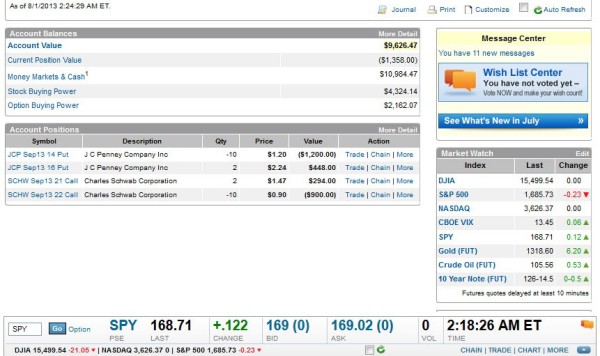
Account overview – this is the page that basically is a summary of the current account. It gives a list of the current trades, account value, margin being held back and how much margin is available for future trades.
Basic Charts – is a screen that offers the trader the opportunity to run through the indicators over various trades. These are on most free reporting platforms, such as Google Finance and Yahoo Finance etc.
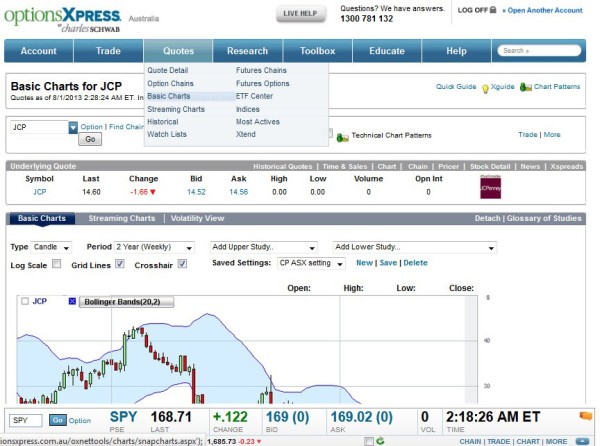
Personally, I focus mainly on support, resistance, and 3 indicators such as Bollinger bands using mostly a 2 year weekly chart, RSI & slow stochastic oscillator.
Account Option Chains (pictured below) are for traders wanting to check prices from month to month as well as the Greeks on the particular options.
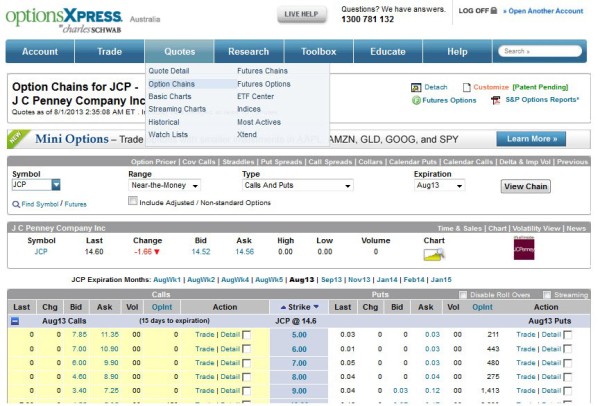
Trade buttons can easily be chosen depending on the type of trade the trader wants to do. From there they can fill in the data of the trade, i.e. stock, strike prices, month of expiry, contract size, order type (credit, debit, market, limit), margin available, etc.
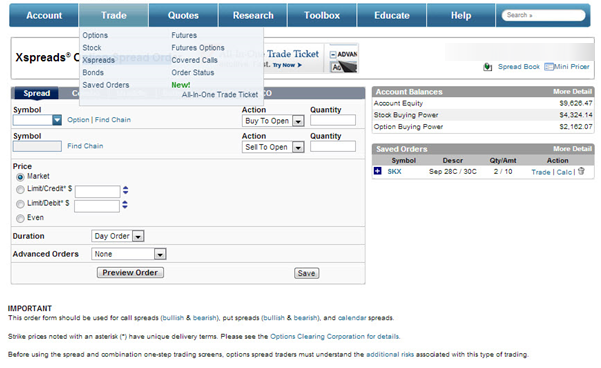
Placing the order – once a trade is identified the trader can save the order in the quotes area ready to place if they decide to proceed with them once market opens.
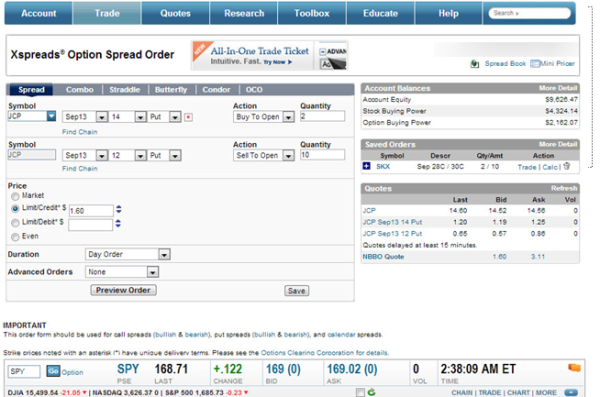
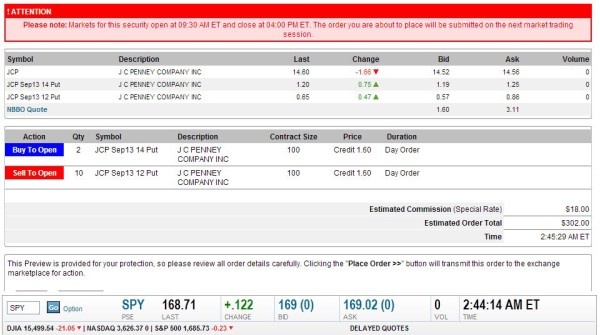
The order parameters are placed and the trader that wishes to proceed once the market is open must preview the order before placing it live. This preview page below is the last opportunity for the trader to check the order is correct and decide whether they really want to place this trade. It also clearly shows the brokerage that will be charged what the underlying stock and options are trading at and potential profit if the order is filled if it is a limit order.
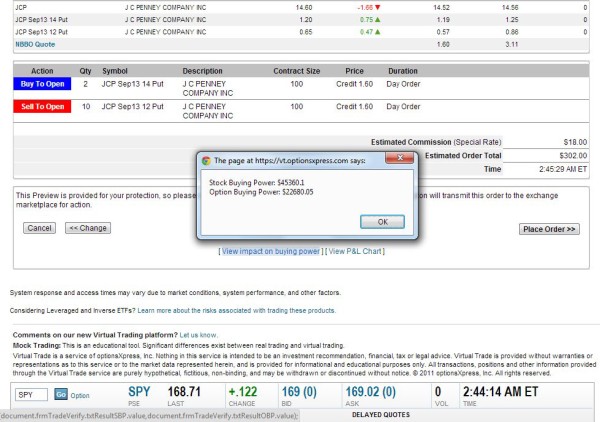
At this point the trader can also measure the impact this particular trade may have on their account by checking the margin requirements. Meeting these final criteria may be the difference of taking or not taking the trade depending on the trader’s guidelines.
Once the order is placed it goes to the market, and the broker issues an order number for the trader which can be used in correspondence if required. The order is live in the market now.
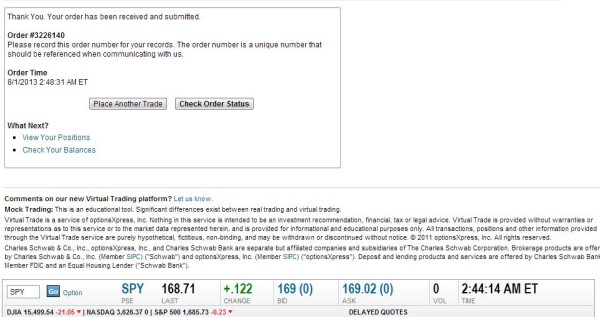
The trader, if using a limit order, can check the order status to see if the order has been filled by the market. A market order is a trade that is placed when the trader will take whatever is currently available. A limit order is what a trader puts in that determines the specific price they want for the trade. While this may be harder to fill, if there are no orders out there, it ensures that a trader is not ripped off by low orders on the market with a market order.
I personally rarely use a market order. I tend to use it only in an emergency if I need to shut down a trade quickly to preserve capital. I never use market order when setting up a new trade.
The limit order ensures I get the price I need to make the trade profitable allowing some room to also close out if needed.
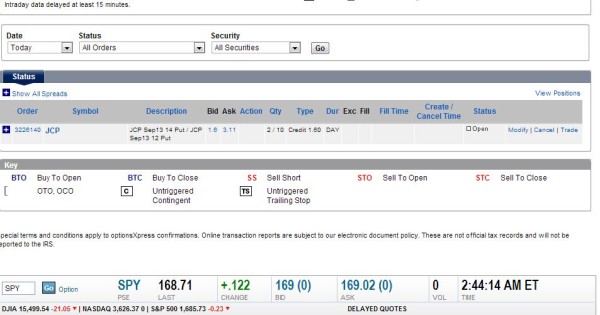
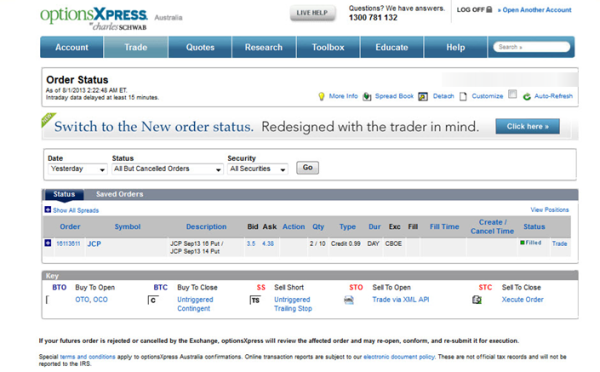
Checking the status of the trade on the above page shows that the market has not filled this position. It is an order that is on offer to someone who wishes to meet it.
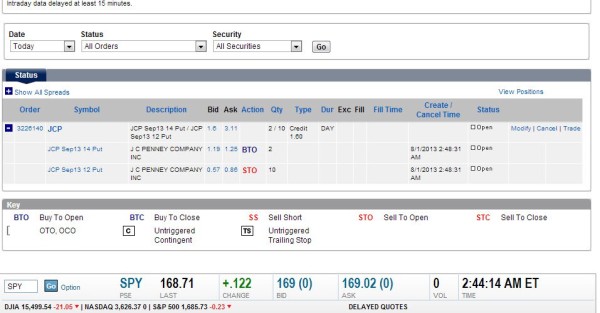
On a spread the various bid and ask prices for each leg of the spread can be reviewed as above. You can see how the spread is entered in as one trade simultaneously as an order. This above is a credit order. The trader wants to be paid up front.
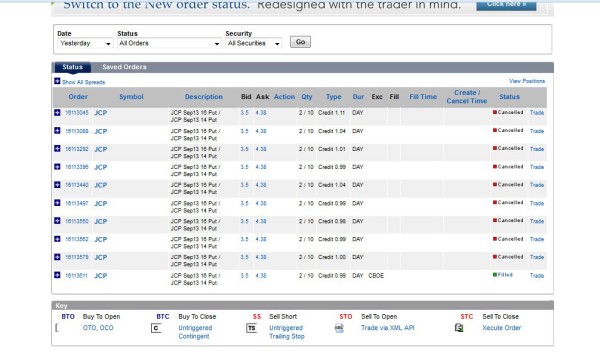
The trader may want to adjust their order as trading progresses if they have not been filled immediately. You can see the various orders place until finally being filled at $0.99 for the trade.
Sometimes when multiple trades are being placed numerous adjusted limit orders can get confusing to review. This platform allows only the current live trades to be viewed through setting it on “All But Cancelled Orders” settings. Many online platforms allow traders to customise it to their preferred settings.
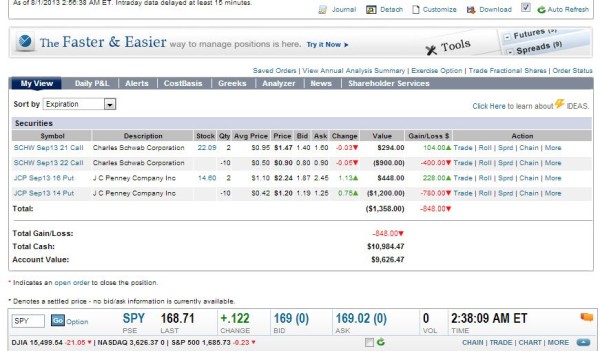
Once a trade is filled a trader can review all of their positions on an account positions page. It compares the various legs of trades, what they were originally filled at, what they are currently, a total account summary, and an indication of overall margin being withheld by the broker. It is not unusual for a trade when it is first placed to appear negative or in the red. Often it takes a day or two for trades to start appearing profitable, even if they are out-of-the money on sold legs due to the movement in the market.
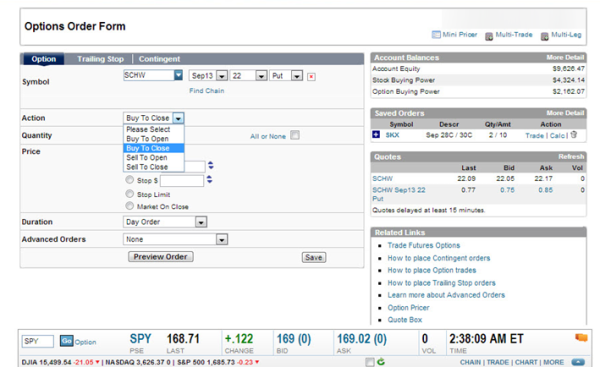
Below a trader is putting a Buy to Close (BTC) order on a particular trade.
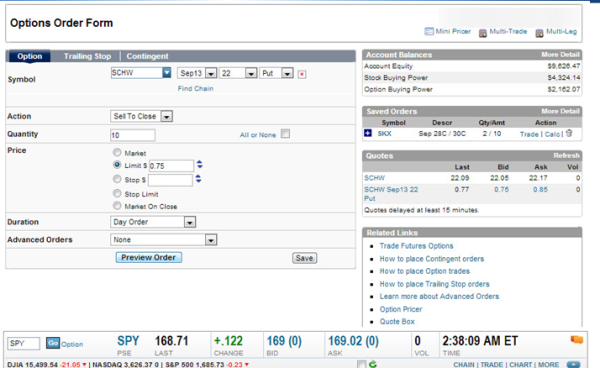
Below a trader is putting a Sell to Close (STC) order on a particular trade with a $0.75 limit order.
The key to any placement of trades and orders is to be able to easily monitor and report what is currently occurring in a trading account and the market. A full service broker, online or combination of both must be functional and work for each individual trader’s circumstance. Spending some time investigating which broker to deal with is worth the effort for a trader. Brokerage costs, functionality of trading platforms, service, and the stability of the broking firm, all need to be assessed.