

Disclaimer: The following article is focused primarily on accounting and legal issues that relate to Australia. Having said this many of the general principles apply in other countries and jurisdictions. For specific and general advice you should seek an appropriate professional as the laws pertaining to taxation and law change constantly. Trading Institute is an educational company presenting factual information only. For investment advice, accounting, or legal advice, please see a licensed professional in the relevant area.
In my years of consulting one thing I’ve noticed is things change when a client decides to treat their hobby, or investments like a business. The emotions change, the demeanor changes, the investment changes, the mindset changes. Things become more serious.
You’ve seen there’s a big difference in the mindset of a trader who has systems in place compared to someone who gets a stock tip from a work colleague around the water cooler. Additionally, you can probably see how dangerous these whisperings can be.
Let’s take the next step up and get into some business perspectives on trading from an accounting and legal point of view.
WHY WOULD A TRADER TRADE LIKE A BUSINESS?
The reason for this is simple:
- 1. The tax breaks are far better.
- 2. You can easily protect your trading account from law suits.
Having worked in law and accounting firms in my financial career one of the keys we teach our clients is wherever possible be a “penniless bum on paper.” To do this you need to work towards a strategy of “Not owning it, but controlling it.”
ASSET PROTECTION, TAX MINIMISATION (PRE & POST-TAX)
Some years ago Ed Burton once presented a number of statistics in highlighting the substantial increase in law suits and litigation within Australia. In fact people can expect to be sued 3 times over their life time. It’s not a question of ‘if’ but a question of ‘when’. This doesn’t mean they will go to court. In fact, the vast majority are settled outside of court.
 Secondly, Australia’s rate of litigation is significantly on the increase. The highest state of litigation in the world is California, the next is New South Wales, Queensland is number 5.
And the law suits are becoming ridiculous in terms of people not accepting responsibility for their actions. One client described to me how they were once at their front door seeing off visitors. As they were doing so the postman arrived with their mail, and instead of dropping it off at the mail box, he drove his motorbike to where they were standing, and handed them the mail. As he was leaving he cut across the lawn and knocked himself off his bike by hitting the children’s tyre swing hanging in the tree. He injured himself and suddenly our client was being sued for damages.
Additionally, one of my business partners, when he was an employee at a different firm, advised a client that the legal advice they were offering had nothing to do with family law. Years later he was in his own practice and this previous client decided to sue him for family law advice. Thankfully my business partner had kept very good file notes to back his case.
The lawyers stepped out of the room and he was left alone in the room with this woman. He quietly asked her, “Look you know you have very little chance of winning this case, do you mind if I ask why you’re doing this?”
She said, “My daughter has fallen really sick. I’ve tried everyone else and you are my last chance of getting money out of anyone.”
Desperate people will do desperate things. It’s not enough to just be doing the right things by people and expect everything to be ok. Just as a trader takes caution on a trade if things go wrong so the foundation of building your wealth must be solid.
Additionally, insurance is not enough. I myself have had insurance claims knocked back on a technicality. People pay good money and expect to be covered when the worse happens. The reality is if an insurance business is over budget they will call in the lawyers and see which claims they can get out of.
So having extra hedges in your business or investments is a must!
When people start a business they all think of the upside, but often don’t think of what could go wrong. Not only are there the risk of law suits, but one of the biggest contributors to closing down businesses is the ATO. Businesses go  through cash flow issues, they can’t pay their taxes and they are forced to shut down. In fact 48% of businesses are bankrupted with debts to the ATO. And if the business is in someone’s name this affects their credit rating and they are pursued personally. If it is set up in an entity the directors can put a company into the hands of the liquidators, and in the majority of cases their credit rating is not affected.
For those running a business and also trading, they have to ask if their business were sued or went into liquidation, or they went bankrupt, would they want their trading account to also be vulnerable?
Ideally they should work within the strategy of ‘Not owning anything, but controlling everything.’ Just as a puppet master pulls the strings on a marionette, so the serious investor wants to control their assets, like the wealthy do. They don’t own the assets; they simply pull the strings giving them maximum asset protection.
The other issue is tax. The majority of this article will focus on taxation for Australian residents. There are various tax rules around international tax. The most common question that comes up for Australian traders is what happens from a tax perspective if they trade a foreign market such as the US. It is different for every country and comes down to the trade relationships and treaties those countries share. So for international traders, tax rules often default to the political relationship of the country the trader resides in with the country they trade in. For Australians wanting to trade the US markets there is a treaty between the two countries which allow traders to be exempt from paying US tax. For specialized tax planning you should speak with the relevant specialist. Contact us at Trading Institute as we deal with the accountants who are in the know in the areas of options, FOREX, CFD’s, international property and specialized legal and tax structuring, etc.
The reality for Australians is they live in one of the highest taxed nations in the world. In fact, the average Australian is taxed 69%! This 69% includes all the hidden taxes beyond income tax. There’s GST, stamp duty, capital gains tax, taxes on fuel, alcohol, environmental taxes, even hidden taxes when they die if their estate planning is not done correctly. Additionally, the average business spends 1 day a week just doing reporting on tax and compliance.
For a trader wanting to build serious wealth the amount of tax they pay makes a huge difference over time especially on the capital they have to reinvest.
For example, let’s say you had $100,000 invested over 10 years consistently earning 20% per annum.
If you paid 46.5% in tax you would be left with $441,143.51 after tax. Now if a trader structures their trading in a company and pays 30% company tax they would have $672,749.99 left over. A Self Managed Super Fund’s tax rate is 15% tax, and they would have $990,597.21 under those conditions. Let’s say they could legitimately and legally find a way to pay 0% tax that amount increases to $1,378,584.92.
You can see how trading in your own name is not tax effective for the successful trader.
In fact tax is so important it has actually shaped periods of history. The birth of Jesus Christ was in Bethlehem because of the tax rule of the Romans. Men have died over tax such as the revolutionary war in the United States. Today people change their citizenship because of it, and even their location and lifestyle which will have an effect on their future generations.
And while we certainly are not into tax avoidance, tax minimization is essential.
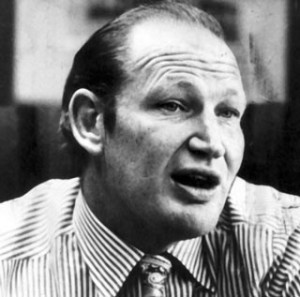 Kerry Packer said at the 1991 Print Media enquiry, “I am not evading tax in any way, shape or form. Now of course I am minimizing my tax and if anybody in this country doesn’t minimize their tax they want their heads read, because as a government I can tell you you’re not spending it that well that we should be donating extra.”
Additionally, there is a huge tax difference between being a speculator and being a trader which we’ll look further into in the next unit in this course.
One of the biggest differences between the poor and wealthy is the way they are set up. The poor pay tax first and then they pay for their costs. The wealthy pay for their costs first and then they pay tax.
The wealthy set up pre-tax environments using trusts and companies to pay for all their business expenses. The poor are generally always in a post-tax experience having paid what they owe first, and are left with what is remaining to pay for their living costs.
What you also have to realize is that governments give businesses tax breaks because of the contribution they make to the community. A business provides employment, keeping people off welfare. An investor such as a property investor provides housing, allowing the government not to have to build state housing.
DIFFERENT STRUCTURES YOU CAN TRADE THROUGH, COMPANIES / TRUSTS, SMSF’S
There are various entities a trader can set up their trading through. Advice from a specialised accountant in this area is a must as it always comes down to the objectives of a trader and what they would like to achieve. This is especially so when there are investors involved, and a trader must be careful they don’t fall foul of ASIC’s strict rules on capital investment raising.
For the sake of simplicity let’s look at various entities an individual trader might consider. Naturally there are pros and cons for each.
A family / discretionary trust creates a pre-tax environment to pay for all your expenses of running that business. They offer solid asset protection, and the ability to split income to the various beneficiaries. Each year the profits must be distributed to various family members and an accountant can assign income to the lower income earners thereby minimising the tax. This is a far better scenario than income going to the one individual. This way they have flexibility as income may change, and this is also a great outcome from financial year to financial year. The downside to trading in a trust is that losses are quarantined in the trust and can’t be claimed against a trader’s personal income. Having said this, they can be carried forward to future profitable years, and if a trader also has positively geared trusts operating a business or an investment property they can offset the negative gearing with those profits.
Company structures can be traded through, too. Again, a pre-tax environment for business expenses is created. An advantage of companies is they can be helpful when there are multiple parties involved. Someone may be providing the capital, while another individual is providing the know-how. Shares can be distributed, and if there are plans to float the company in the future on an exchange or sell the business these can be done quite easily. The downside to a company is its profits are taxed at a flat 30%, and this can be higher than necessary if it is simply an individual trading. A lot comes down to how much investment capital is in the account. Again, losses are quarantined in the company and can’t be claimed in the individual’s name but can be carried forward.
 A company does attract an annual registration fee from ASIC, and can also be used as a trustee for a family trust.
Additionally, both of these entities are greater in accounting fees and set up costs. So what has to be weighed up here is the need for asset protection, the tax savings possible by doing so, and how serious the trader is to run it like a business as opposed to a hobby.
If you make losses in trading those losses can be quarantined in the trust or company.
The costs to run a trust and company are higher than doing tax returns in your own name; however, there may be massive savings in tax. Ideally the savings outweigh the compliance costs.
Self Managed Super Funds (SMSF’s) are a growing area. They are only taxed at 15% and after someone is 60 they are tax free. You can have up to 4 members in a Self Managed Super Fund which gives a trader more leverage, and additionally, a SMSF can own property and apply for loans for a property. You can buy commercial premises in a SMSF and run your business from it.
The disadvantages of a SMSF are you can’t touch the fund until you reach the age of retirement.
The fund will undergo a compulsory audit every year, and accounting costs can range anywhere between $2,000 – $5,000, so you have to ensure return on investment outgrows ongoing compliance costs.
You can’t do trades with margin involved in a Self Managed Super Fund as the ATO doesn’t allow it. Covered calls without margin are permissible.
Finally, it is important that estate planning is organised. If an entity is created who inherits it if the worse were to occur? An entity is not an individual but controlled by individuals and may outlive the person who founded it. Most people in Australia if they have a Will have a Simple Will.
The vast majority don’t realise there are hidden taxes when you pass away in Australia which relate to the handing down of an estate. For example, if someone leaves a house with a 50/50 split to 2 children they will incur hidden taxes if the estate is not planned carefully. Let’s say one of the children wants to sell their share of the house and the other wants to live in it. They may decide to do a deal where one lives in it and buys the other out. The moment they do this in Australia they attract capital gains tax simply because they changed the title on the property.
A 3 Generational Testamentary Trust Will, sometimes called a Bloodline Will can eliminate all capital gains tax and stamp duty on death.
Estate planning is a must for serious traders to consider in looking after their loved ones interests. A qualified lawyer should always be consulted in these matters especially for the more specialised areas. At Trading Institute we can put students in touch with specialists in these fields through our networks.
Structuring trading like a business is a must for the serious trader. It ensures their trading accounts are protected against litigation, and gives them the ability to minimise their taxation.
A structure is one of the things the ATO looks at in defining whether they are running a legitimate business. We will cover the other component in the next unit.