

Gordan Gecko’s famous speech ‘Greed is Good’ in the movie Wall Street, certainly summarised key manic periods of history. The Roaring ‘20’s and boom of the ‘80’s are moments that go down as times when greed reached hysterical heights and caused people to take on risk they could not afford.
Dr John Demartini says that one of the signs of when a crash is about to happen is when the skyline above a city becomes overcrowded by cranes building skyscrapers. Buildings are going up at an alarming rate, people are overleveraged. An overcrowding of cranes on the skyline in a boom market is a sign to him that a crash is on the way to bring things back into equilibrium.
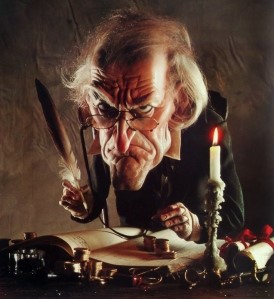 Buffet has been quoted, ‘Be fearful when others are greedy; and greedy when others are fearful.’
We’ve dealt a lot with the fear of the market but haven’t spoken a great deal about the other side – greed. The mindset of greed is to take and not share. It stores and hoards for itself and doesn’t give out to others. It’s been termed ‘tight fisted,’ hoarding, and when it comes to the markets is often associated with taking more risk than is necessary.
In some situations the fear of ‘not having enough’ or ‘great lack’ may be a driver of it. It’s ironic to think that greed can come from fear. Greed is generally defined as lacking any spirit of generosity or giving.
It’s been said it can rob an individual of life and joy. The question can become who or what is in control? Does the individual with greed master their money, or does their money master them?
Conversely, a state of contentment and satisfaction has been attributed by many writers throughout the ages as an ideal conscious state. Many draw this from the ancient wisdom of ‘Godliness with contentment is great gain.’ (Bible 1 Timothy 6:6)
I know someone who is personal friends with Richard Branson. It was reported to me that in a private conversation with them Richard said that his goal was to never to start a business for the sake of making money, but it was to work to see a great cause happen.
What a great motivation for having a business! He wants to ensure that the business is contributing to the improvement of society and humanity. If one profits from it, in the process of bettering humanity it is a fantastic result! You can see that the spirit of giving and contribution is central here, and when this occurs more is received. Why? So even more can be poured out and contributed.
I know of a situation where a man had been a great believer in contributing 10% of his wealth to greater causes. He’d give to charitable organisations, or churches, or spiritual leaders. He was selective in who he gave to, and ensured the funds were used for good purposes.
Well, things got tight in his business and for a while he stopped giving. Someone had got in his ear on the matter causing him to question the principles, and he started to listen to what they said. Consequently, his contributions diminished. He got by for a while, and then suddenly he started to notice the cash flow began to really slow down. He had to make a very conscious decision. Was he going to get back to what had always worked or stay in his current behaviour? His whole attitude had become one of scarcity. He decided what he was currently doing wasn’t working so it was time to change back to what did work, but at the same time investigate more thoroughly an area he knew he still had a lot to learn in. So he relooked at the principles of giving and decided to test it. Despite the cash being tight he gave. His focus changed as he released the funds and he became a contributor to the greater good again. In a very short while cash began to flow in from different sources. Out of the blue a group decided to give him $1,000. Within the same couple of days his wife had wanted a DVD player for the car to entertain their child during a long trip she was about to take. To cut a long story short, through circumstances beyond her power, she was given $120 credit by an electronics store to buy one. From there he couldn’t wait to contribute more.
More is given to a generous spirit. Because it flows to other great causes.
We must also remember wealth is more than a bank account amount. I’ve met very wealthy people who are downright lonely and miserable. Wealth is also about the richness of relationships, health and living your life purpose. When there’s a spirit of generosity, giving, and contributing there’s abundance.
 Recently I heard the CEO of a multi-billion dollar Australian corporation speak regarding the financial system we live in. His comments were fascinating and against the norm.
‘Our system works in fractions. God is about multiplication. There are problems when people are trying to squeeze as much as they can out of a sale. This practice leaves very little “seed” money for that person to then go on to build wealth for their families. You see it when people try to sell their house for the maximum price through to business owners trying to get everything they can out of their customers. The problem with this is people don’t want to do business with them again.’
He then went on to share multiple stories of when there was a spirit of generosity in the business deal, and the wealth that was originally invested was multiplied several times over. There were enough funds remaining for those people to have capital to start something else and get out of the financial problems they were in. Consequently, the ones who helped out had returns far greater than norm.
His score sheet tells the best story and I came away from his talk challenged.
THE MISTAKE MANY OPTIONS TRADERS MAKE
Why do I share all this? Well, there’s a common mistake many options traders make.
Obviously, there is the risk of taking trades that go beyond their guidelines when greed kicks in. The excited “euphoria” of a great win, needs time to settle so the emotions can become balanced again.
 It also shows up in another area. Many options traders think they must let a contract run out to expiry. They’ve made a good sale setting up the trade, it has gone their way, and they are set to make a very tidy profit.
A lot of options traders think they can make more money if they let an option expire worthless.
Here’s the problem. A trade can be winning and going their way but the markets can swing very quickly the other way and do a reversal!
Remember by writing an option contract a trader has written a liability!
In the case of a put they are saying they will pay the owner of the option the agreed strike price even if the share price is well below in market value the strike agreed to, times however many contracts they have signed up for.
With a call an options writer has agreed they will pay the owner of the call the agreed value of the stock at whatever strike point that’s been agreed to. If the stock was $20 when it was written and now it is worth $100 the options writer, if they have not protected the position, is now liable for $100 times the number of contracts.
Recently I was in a rather complex trade with a number of legs in the various spreads and there was just that, an opportunity to close out one of those liable legs. As I was in defence mode and the stock had become very volatile I was hoping to recoup some loss on that trade even though the rest of my trades had been winners. The market provided an opportunity for me to close out this one leg and I was conscious of it. It would have meant I would have removed some liability. Because I was already down in the trade I wanted a ‘little bit more’ to recoup the losses I had incurred previously. Suddenly the stock went the other way and the winning leg was now going to cost me a lot more to close out than it gave me when I got into the trade. I was now in defence mode again facing more loss! In hindsight it would have been smarter to close out, and if I wished to continue to trade over the same stock do so from a safer out-the-money position. It’s these trades where the greatest lessons are learned!
Additionally, I noted another case where the trader was down, but due to the defence they put into the trade could suddenly make a trade profitable as the market had turned amazingly in their favour when initially it went against them. They were now in the unusual situation of potentially making a losing trade into a real winner as they had been monitoring the trade with great vigilance. They wondered if they should let it run so they could get ‘a little bit more’.
There’s great wisdom in a phrase I once heard about investing. ‘You never make a loss when you are taking a profit.’
THE IMPORTANCE OF LOCKING IN A PROFIT
This trader was faced with a decision. Take the profit off the table and go for safety, or risk turning a now profitable position into a loss for the sake of making a ‘little bit more!’
It’s important to recognize in our psychology we humans wrestle with the fear of ‘missing out!’
Traders must remember when there’s a financial gain to be made, take it! They never lose in this situation. We call it ‘locking in a profit.’
 Additionally, there are other benefits when the sold contracts are bought to close (BTC) to close a winning trade.
The margin is reduced or completely freed up on that specific trade if there are no more sold positions in the market on that position. This frees up more margin for more potentially winning trades.
It creates safety.
In some situations with spreads there’s even a bonus! If the bought leg is not bought to close (BTC) after the profit is taken the market does turn. If the bought leg in the market, (the protection leg created at the start of the trade), goes in-the-money, there is another opportunity to profit from the same trade. The contracts have picked up intrinsic value, and can be sold for more than they were originally bought. This is what happened in the above case study.
WHEN AND HOW TO LOCK IN A PROFIT
Another spread trader chips away at the liability until he can close the rest out for profit!
He typically on his sold leg of the spread sells 100 contracts on the ASX. Remember this is 1,000 shares per contract. So there are big numbers on the line. If the position improves over time, but it is still too early to completely close, he may buy back 20 of the original 100 contracts, wait a few more days as the trade improves and buy back a further 20 etc. This way he is constantly chipping back his liability.
In fact, on the topic of ‘locking in a profit’ he’s been so kind as to allow me to publish a few emails he once sent me. Here’s a case study of what he does …
‘Hi Derek,
As stated yesterday I took a BHP trade on the 3/1/2013, in fact last week when the market was strong and beta quite high on Industrial stocks. BHP at the time was trading around $37.70-$37.90 and I took the following:
Buy 40 x $38.00 Feb Series
Sell 200 x $39.50 Feb Series
Made $5.4k minus $180 in brokerage and OCH fees.
Today with BHP being off quite a lot the $38.00 series is trading at $0.38 and the $39.50 at $0.09, therefore I closed it out with a debit of $280, plus $180 in brokerage and OCH fees. Simply did this as a safety measure and remember you don’t have to wait for expiry, if you can close out early even 5 weeks early like the above and pocket some money then do it.’
And then there’s this example …
‘Hi Derek
On the 31/12/2012 I took the following trade:
Buy RIO x $70.00
Sell RIO x $73.00
RIO has come off a lot the last two weeks and even though there is 5 weeks to run before the February series expire I am closing out today the Sold $73.00 series for around $0.01-$0.02 cents. That will leave me with 30 x $70.00 bought that if RIO runs up hard the next few weeks will kick in and be a bonus. The $73.00 close will cost me approx. $100-$200, after an initial credit of $5.5k.
Again this is a very important part of managing the trade.
It’s important because spending a little to either totally exclude liability on a trade or decrease it is critical and will save many trades especially with 5 weeks to run.
WE DON’T NEED TO WAIT TILL EXPIRY, GET ACTIVE AND CLOSE DOWN LIABAILTY ASAP.’
NAME WITHELD
This is particularly so for credit limit orders. Credit refers to a sale and being paid up front. Limit refers to rather than receiving what the market offers; the trader sets the price as to what they’d like to receive. If the market offers it the trade is filled.
These days he is also placing debit orders. This means he is buying upfront rather than receiving a sale. His objective is now to profit from intrinsic growth. For him it takes less active monitoring during the day. In my latest conversations with him this suits his busier lifestyle, and he’s adjusted the time frame where he’ll trade 4 months before expiry while placing a sold leg of the spread for 2 months out over the same stock in a different configuration to offset the cost of his bought order.
As you can see he is a sophisticated master trader at what he does and is very advanced.
Let’s keep things simple.
Below is an example of a spread trade. This is a special example of a prime time for a trader to close down a trade.
You can see there is a special symbol that pops up offering a reduced brokerage deal for the trader by the broker. The option is usually less than $0.05. A smart trader would take the reduced broker, lock in the profit, take the liability away from the trade, reduce the margin and look for a new trade.
Sure, the broker gets paid more than if the trader let it expire worthless. But it’s a win-win for both.
A trader is pulling a bigger profit than the broker is in this instance. The trader should be generous to the broker by paying the reduced brokerage and locking in some profit.
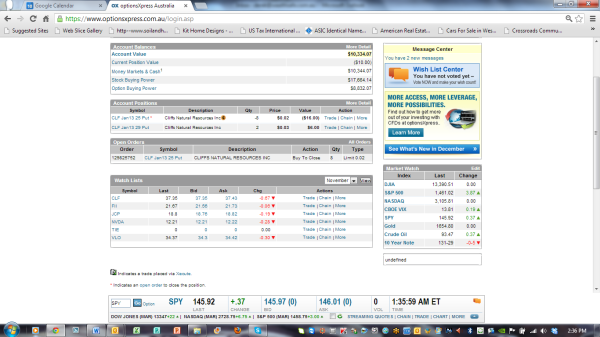
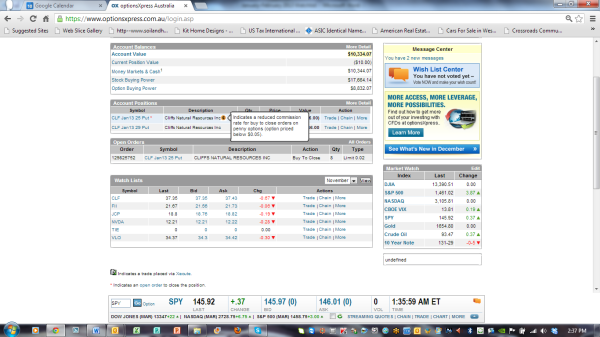
The mechanics of putting orders into a trading platform is looked at in section 4 of this course.
Keeping greed in check by locking in a profit is a key strategy for options traders.