

 One of my business partners once told me the story of how he decided to learn the piano to impress the girls. He was at a youth rally and noticed the ‘cool guy’ playing the piano or keyboard at the concert. And so my business partner devoted himself to 3 hours of practising a day, for a whole year. One of the stages he went through at that time was ‘over playing’ the song. You’ve learned a tonne of new techniques which you are keen to master and in order to ‘show off’ your ability, you tend to pull out all the tricks in the one musical score. There’s an attempt to impress by throwing in all the trills, key changes, and ‘wow’ factors to demonstrate your ability. A master on the other hand plays from the heart. The technique is there but the interpretation and portrayal of that heart-felt melody is the difference between trying to prove you are good and being good.
He also told me the 12 month devotion to practicing the piano definitely made him a better player. Unfortunately, it didn’t impress the girls.
 Once a trader has learned a few strategies and techniques they can be tempted to “over trade” instead of just simply focussing on getting a result which speaks for itself.
I’ve always said one of the signs of mastery is someone who does what they are an expert in and make it look easy. It’s taken process, dedication and sacrifice which has largely gone unseen. Once they’ve arrived at that point a master knows what they are capable of. There is no need to prove it.
There’s also another level that a trader must step up to, and that’s going from a novice to running their trading as if it were a business.
A business has systems in place to achieve a result.
And this is where systemisation of trading comes into play when it comes to advanced options trading.
RULES VS GUIDELINES
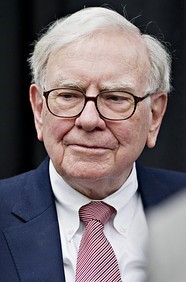 ‘Rule number one: Never lose money. Rule number 2: Never forget rule number one!’ This is again another quote that has been credited to the famous Warren Buffet.
My first mentor always quoted Royal Air Force Fighting Ace during the 2nd World War, Douglas Bader, ‘Rules are for the guidance of wise men and the obedience of fools.’
Both quotes have merit.
One of the key elements a trader must always remember is ‘Defend your capital! If they lose their capital it will affect their ability to trade.
 Additionally, my first mentor always said, ‘You must protect your mindset!’ Money can be gained and lost.
But if the confidence is lost the damage is done.
Let’s look at the merit of rules and guidelines in turn.
People often stress rules because they see a lack of discipline in society at large. Let’s face it! We are always hearing about losing weight, watching what we eat, getting enough exercise, getting enough sleep, not drinking too much, giving up smoking, driving a certain way … the list goes on! It’s been said the harm comes in excess with the absence of moderation.
And let’s also be honest. Most of us have our little indulgences. I am a sucker for the peanut butter chocolate ice cream down at the local ice cream store, and rarely will I stray from my favourite flavour. But I remain balanced by not frequenting it too often. The last time I was in America I stacked on the weight simply because I went all out indulging in my favourite foods which I couldn’t get back in Australia. It took some time to work it off and it was thankfully temporary.
When it comes to trading the need for rules is stressed as many lack the discipline in the heat of a trade to stick to what they set out to do. Extreme emotion is the big enemy of trading. Driven on fear and greed the markets mercilessly will take people’s wealth while the disciplined profit from the market.
When the headlines scream ‘Millions lost!’ all that has occurred in reality is an exchange of wealth. It has merely passed hands from one person to the next. This should start to become obvious now that you’ve learned about bear call spreads.
Strict rules don’t allow flexibility. There needs to be reasonable flexibility, simply because markets change. Businesses and companies change. This has an affect to other businesses and their profitability; this flows on to investors’ perceptions of a stock, which can affect market sentiment.
My mentor preferred to call rules – ‘guidelines’. This was contrary to the common taught notion of sticking to your trading rules. Simply put what he was trying to say was, ‘Stick to your trading guidelines.’
 This allowed flexibility, but more importantly common sense in making decisions. Rules don’t always allow that flexibility. They may not be the best fit for every trade scenario. A trader would be better off doing the most obvious, in a calm, relaxed, and well thought manner. My mentor would be happy to be exercised whereas most traders avoided it like the plague.
When I trade and things have gone against me, I will always write down what my options are given in every scenario that may play out. This assists me in formulating a strategy in a relaxed way, and then simply implementing it depending on what plays out in the market.
Needless to say options trading requires a high level of self-discipline and responsibility.
WRITING GUIDELINES
So what happens with the guidelines?
You’ve probably gathered by now there are no rules about this except perhaps to say a trader must defend capital once committed to a trade.
The formulation of many of these guidelines will also come down to how they apply to the selected options strategy of the individual trader.
Here are some areas that need to be considered and I’ll elaborate on the thinking behind them:
- 1. Will the trader primarily buy or sell options?
If we work on the over-generalisation that 80% of options expire worthless this may affect the decisions a trader makes depending on their objectives.
- 2. Will the trader buy any protection upfront when they execute the trade? If so, how much protection upfront?
Again much of this is subject to the particular strategy the trader selects, and their attitude to risk.
- 3. How will the trader pick their stock on an underlying asset? What will be their criteria?
This may vary greatly from trader to trader.
Personally, I primarily look for blue chip companies. Companies with proven records and that are healthy. And the reason for this is I believe they are companies that will show resilience if the market were to take a big dive or have a big swing. My reasoning is they are more likely to bounce back quicker than the small “2 guys in lab coats in a shed running experiments” type of companies.
Trade selection criteria, is expanded further in the 12 Month Premium Classroom – Advanced Options Trading Course 201 which Trading Institute conducts.
- 4. Will the trader diversify their trades?
Many financial planners speak about the value of diversification. It’s similar to the difference between putting it all on red or black down at the casino or hedging things to ensure that the whole portfolio is not reliant on one particular trade.
- 5. Will the trader diversify their trades across a number of industry sectors?
This is now diversification within diversification. It’s often been observed by traders that different industries go through periods of growth and slowing. Tourism, mining, manufacturing, housing sectors all have their own booms and busts. Will a trader spread their trades across multiple sectors or stick with a few? A trader may have limited capital to trade, and if this is the case they must find the balance between diversification and being selective on what they can trade practically.
- 6. How close will the trader trade options to the stock price?
Remember that options allow you to trade at different strike points. So how close to the market price does a trader want to get? Again, this will largely come down to risk profile and what kind of trader they are. The closer they are to the market the higher the option premium, and at the same time the higher the risk.
- 7. How much margin and what percentage of the account will be devoted to any one trade?
Margin must be managed carefully and will vary again when it comes to the requirements of the broker subject to the underlying stock, the price of the stock, and also the strategy the trader is employing. Option trades with no underlying asset, generally attract greater margin requirements. The last thing a trader wants is a margin call so it must be assessed carefully.
- 8. What roll down or morphing techniques will be used if a trade goes against them? At what point will a roll down be employed? When and what is a crisis point? What will be tolerated and not tolerated in the defending of capital?
Being very clear on defending their account is critical for a trader. When rolling down or morphing there are times where I have had to just force myself to trust my guidelines and stick to it! The amount of dollars can scream at a trader at first,, and they may gulp as they go! Personally, I try to avoid overanalysing the trade especially when I’m live in the market. I know “’analysis paralyses’ is one of the things I’ve had to work on in my life. I don’t want to be the deer stuck in the headlights especially when action must be taken. My goal is to always be able to roll down precisely, calmly and with precision.
I found after time a trader will find it less strenuous and less of an emotional exercise. Ideally a roll down becomes emotionally an annoying inconvenience that just has to be done from time to time. Practice and confidence in a good system makes all the difference!
- 9. Will the trader trade companies during their earning season’s reports or dividend periods?
This is always an individual decision and will work differently for different trades. So views on this will vary from trader to trader. I personally try to avoid them. One of my mentors avoids them; the other doesn’t worry about them. We’ll explore this further in Course 4 – Practical – Subject 3 – Company Announcements, Dividend payouts & holidays.
- 10. Will indicators be used, which ones, and if so how closely will they be adhered to?
Different traders will use different indicators. Some will use more than others and some will use none. What settings will be used on the indicators? In the case of stochastic will the trader use a fast or slow, and will both have to align or will “thereabouts” be good enough to signal a trade?
DIRECTIONAL TRADING, PROBABILITY & DIVERSITY
Another influence that will affect the formulation of guidelines is trading style.
 What I found was my first mentor was very much into probability and diversification. As previously mentioned he had in his career been a professional horse gambler and horse trainer. His friends couldn’t work out how he consistently picked winners. He had a developed system of stacking the odds in his favour, and he applied this experience to trading which worked incredibly successfully for him.
My second mentor was a hedge fund trader. He had worked in a stock broking firm in the US, set up his own hedge fund back in Australia, ,and before taking on any new recruits he would look at their trading results rather than looking at their degrees and qualifications. He wanted to see how they traded their own money before allowing them the responsibility of trading other people’s money. His style was directional trading. In other words, he would use indicators to determine which way the stock may trade and apply his strategy subject to those findings.
As a student of both their styles I took the strengths of each and applied them as a combination of directional and probability trading.
As a result my trading guidelines evolved over time. I had a set of guidelines that I used for naked put trading which were my mentor’s, and I then adapted them to Reverse Spread Ratios with a few modifications and adjustments.
All of the above criteria were described in detail as to how they would be handled and in what situation. They became my “flight instruments” to guide me when things became blurred or confusing.
From my experience as a consultant, I’ve also found the simpler the system is the higher the likelihood of success. On their own, options are complex enough. The simpler the system the easier it is to follow.
For instance, I discovered one system which enables the traders to get their fundamental analysis on companies from a website saving 3 hours of analytical work in determining whether a stock is over or undervalued.
These traders have every intention of owning the stock, so it must be one they are happy with.
Additionally, they refuse to trade with margin, which reduces risk, and helps them not have to manage and monitor it so closely.
To get into the trade they will sell a naked put. When exercised they convert the trade into a covered call, selling the call at the same strike price they sold the put. They are not interested in capital growth, simply cash flow.
If the market is overheated they will protect the stock by trading the covered call with a collar.
They report this trading style gives them on average a 20% return a year. They are very conservative and adverse to risk.
You can see the methodology here at work. There is a simple system that is followed with the intent of getting consistent results.
Additionally, I’ve found great benefit in treating the trade as if it were someone else’s money. When I started one of my business partners contributed 50% of their own funds to the account so I was responsible not just for my money but theirs. This forced me to look after the trades better than if it were just mine. I knew I was accountable to them for losses and it forced me to stay on my toes as a better trader.
There’s an old saying “He that is faithful in that which is least is faithful also in much: and he that is unjust in the least is unjust also in much.” (The Bible – Luke 16:10)
Systemising the strategy that a trader selects is the next stage in determining their success. It turns the trading to a more business like behaviour, reducing emotional decisions made in the heat of the market.